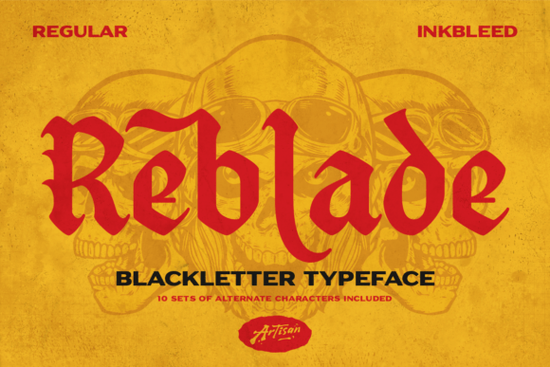
Finding the right typography for edgy, alternative, or vintage projects can be tricky. You need something that looks authentic without being completely unreadable. The Reblade Font is a modern blackletter typeface that bridges this gap perfectly. It draws heavy inspiration from classic gothic calligraphy and custom tattoo art, giving it a strong, vintage attitude. Whether you are designing merchandise for a biker clothing line, creating a logo for a metal band, or working on vintage-style packaging, this typeface brings instant character to the canvas.
What makes a good blackletter typeface for apparel and logos?
Blackletter fonts are historically dense and highly decorative. While they are not meant for long paragraphs of body text, they excel in short, impactful bursts. When designing a logo or a chest print for a t-shirt, you want the lettering to be legible from a distance while still carrying that heavy, aggressive aesthetic.
When browsing through various gothic and old english style typefaces, you want to look for clean vector edges and consistent stroke weights. A well-crafted typeface will maintain its sharp points and smooth curves even when scaled up for a large banner or scaled down for a small clothing tag. Reblade handles this scaling well because its modern construction keeps the intricate details from muddying together when printed on fabric. This means your fine lines will not bleed into each other during the screen printing process.
How do you use gothic typography in print-on-demand designs?
Print-on-demand sellers know that contrast is the secret to a good design. If your main headline uses a heavy, ornate style, your supporting text needs to be quiet and simple. Understanding the historical roots of styles that influenced the Reblade Font helps you pair it correctly with other design elements. Since this style originates from medieval manuscripts and evolved into modern tattoo lettering, it carries a lot of visual weight.
To make your POD products stand out, follow these layout rules:
- Keep it brief: Limit your gothic text to one to three words. Long phrases become impossible to read.
- Use high contrast: White or off-white ink on a black or heather grey garment makes the sharp edges pop.
- Add subtle distressing: Since this style has a vintage, rugged feel, applying a slight grunge texture over the final design makes it look like a well-worn vintage band tee.
You can easily grab the Reblade Font to start testing these layouts in your preferred vector software.
Which projects work best with heavy, tattoo-inspired lettering?
This specific style of lettering is highly versatile within certain subcultures and niches. Small businesses and freelance designers will find it incredibly useful for clients in the following industries:
- Music Merchandise: Perfect for metal, hardcore, and rock band logos, album covers, and tour posters.
- Streetwear and Biker Apparel: Ideal for back prints on leather jackets, denim vests, and heavy cotton hoodies.
- Craft Beverages: Works beautifully on craft beer cans, bourbon labels, and dark roast coffee packaging.
- Event Branding: Great for gig flyers, tattoo conventions, and motorcycle rally promotions.
What are the best font pairings for heavy gothic letters?
Never pair two highly decorative fonts together. If your main title is set in a thick blackletter, your secondary information like dates, locations, or taglines should be set in a clean, minimalist font.
A geometric sans-serif or a simple monospaced typeface provides the perfect visual break. This contrast ensures the reader can quickly absorb the practical information without their eyes getting tired. For example, if your main brand name is highly ornate, use a basic sans-serif for the "Established 2024" text underneath. Always prioritize readability for your secondary text. You can also use simple line work or traditional tattoo-style illustrations, like roses or daggers, to frame the text without competing with the lettering itself.
Pre-Press Checklist for Apparel Printing
Before you send your final design to the printer or upload it to your storefront, run through this quick checklist to ensure the best results:
- Outline your text: Convert all typography to vector outlines so the printer does not need to install the typeface on their machines.
- Check the stroke thickness: Ensure the thinnest parts of the letters are thick enough to hold ink on a textured fabric.
- Verify the color mode: Switch your document to CMYK if you are using direct-to-garment or screen printing to get accurate color representation.
- Flatten transparent effects: If you added drop shadows or glows in your design software, flatten those layers to avoid unexpected printing artifacts.
- Test the scale: Print the design on a standard piece of paper at actual size to verify that the intricate details remain crisp and legible.
 Heart Monograms: Elegant Fonts for Personal Projects
 Brightside Font for Web Projects & Creative Design
 Garol Font: Creative Typography for Modern Design
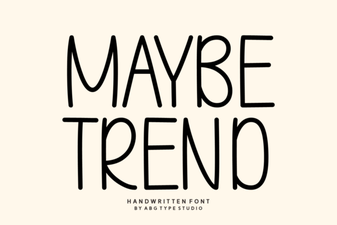 Maybe Trend: an Approach to Modern Design Typography
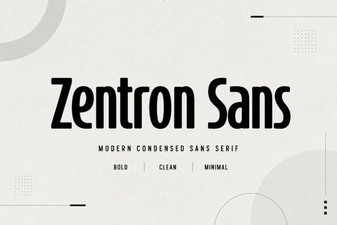 Zentron Sans Font: Creative Design Inspiration
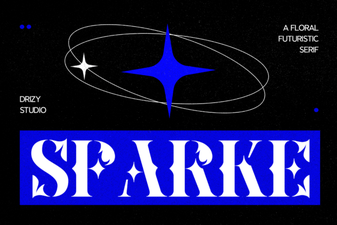 Sparke Font: Modern Typography for Creative Projects